Baby Head Circumference
Head circumference is one of the three fundamental measurements taken at every pediatric visit, along with weight and height. This measurement is especially important during the first two years of life.
What Is Head Circumference?
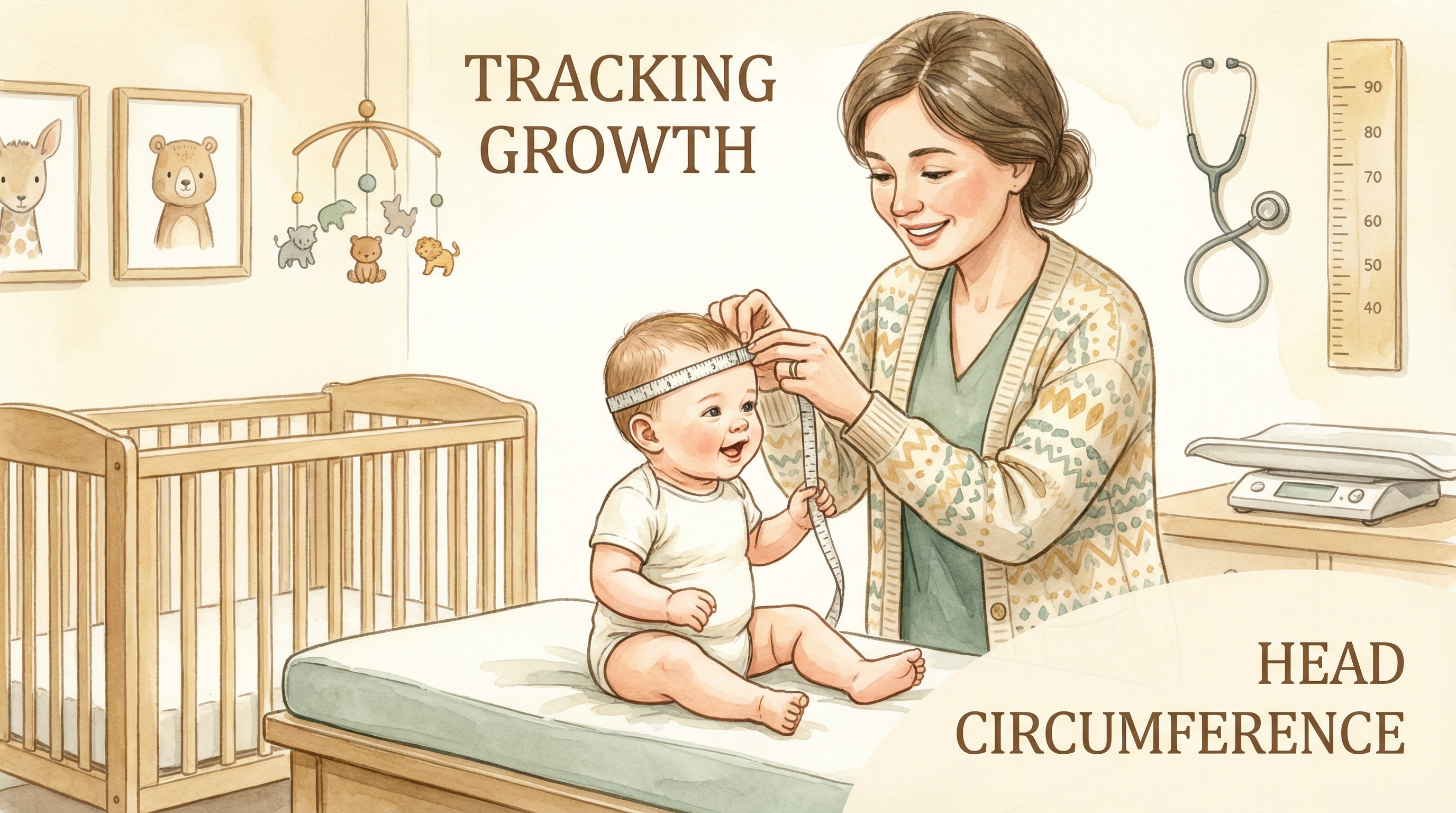
Head circumference is the measurement of the baby's head around its widest point: just above the eyebrows and ears, and around the most prominent part of the back of the skull.
Why Is It Important?
Head growth directly reflects brain growth. During the first two years, the baby's brain grows faster than at any other time in life, reaching approximately 80% of its adult size by age 2.
Normal Values by Age
At birth:
- Boys: 34-35 cm (13.4-13.8 in), average 34.5 cm
- Girls: 33-34 cm (13.0-13.4 in), average 33.9 cm
At 3 months:
- Boys: 40-41 cm (15.7-16.1 in)
- Girls: 39-40 cm (15.4-15.7 in)
At 12 months:
- Boys: 46-47 cm (18.1-18.5 in)
- Girls: 45-46 cm (17.7-18.1 in)
Normal Head Growth
Head circumference grows approximately:
- 0-3 months: 2 cm per month
- 3-6 months: 1 cm per month
- 6-12 months: 0.5 cm per month
- 1-2 years: 0.25 cm per month
When to Be Concerned
Macrocephaly (large head): A head circumference above the 97th percentile may require evaluation. It can be familial (benign) or indicate conditions like hydrocephalus.
Microcephaly (small head): A circumference below the 3rd percentile may indicate brain development problems and requires medical evaluation.
Accelerated or decelerated growth: A rapid change in the head growth curve is more concerning than an absolute large or small size.
The Fontanelle
Fontanelles are the soft spots on the baby's skull where bones haven't yet fused. The anterior fontanelle (on top of the head) typically closes between 12 and 18 months. A bulging or sunken fontanelle can be a sign of medical problems.
How to Monitor at Home
While the most precise measurements are taken by the pediatrician, you can use a flexible measuring tape at home to track between visits. Record results in BabyGrow to see the trend over time.